
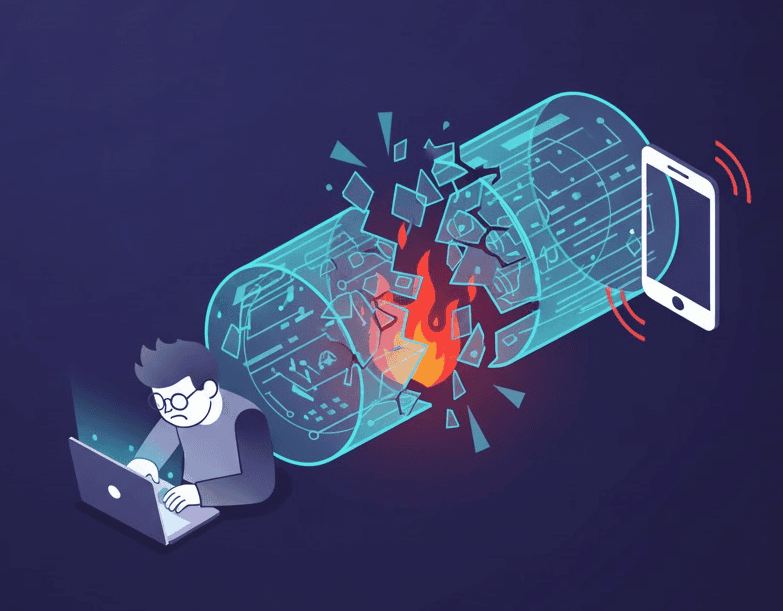
Your CI pipeline failed again. The error log says “BrowserStack Local connection dropped.” You restart the tunnel, re-run the tests, and it works. Until tomorrow, when it doesn’t.
You’ve tried the workarounds. Added retry logic. Increased timeouts. Posted in the support forum. And you’re starting to wonder: is it just me?
It’s not just you.
The Evidence: 2024-2025
GitHub Issues Still Open
The browserstack-local-nodejs repository tells the story:
October 2025 — Issue #166 reports Windows 11 24H2 failures with “spawn wmic.exe ENOENT” and “EBUSY: resource busy or locked” errors. The binary fails on consecutive runs because it doesn’t release file handles properly.
July 2025 — Issue #164 documents that the binary download doesn’t respect proxy authentication. Engineers behind corporate proxies can’t even get started.
May 2025 — Issue #160 requests Apple Silicon native support. In 2025, M1/M2/M3 Mac users are still running the binary through Rosetta emulation.
April 2024 — Issue #153 reports error messages showing only “[Object object]” — completely useless for debugging. Still open.
May 2023 — Issue #143 describes WebSocket connection failures during test runs. Two years later, still unresolved.
The WebDriverIO ecosystem shows the same pattern. Issue #13722 from October 2024 documents WDIO v9 compatibility problems with spawn errors and fetch failures. The broyster project’s issue #84 reports the BrowserStackLocal process hanging after test scripts quit — orphaned processes blocking ports for subsequent runs.
Q4 2025 Outages
BrowserStack’s status page documents six service disruptions in the last two months:
| Date | Duration | Service Impacted |
|---|---|---|
| November 18 | 11 minutes | General Service |
| December 4 | 20 minutes | Automate |
| December 17 | 33 minutes | App Live |
| December 18 | 32 minutes | Local Binary Initiation |
| December 19 | 10 minutes | App Live |
| December 21 | 5 minutes | Test Management |
That December 18th outage hit Local Binary Initiation specifically — the exact service that frustrated engineers depend on for localhost testing.
What Users Are Saying
The reviews from 2024-2025 paint a consistent picture.
A Trustpilot reviewer in 2024 wrote: “Had issues with local testing for 6+ months. Made around 5 attempts to get help from the support staff and engineers, but all of my requests were ignored.”
An engineer at a large French company shared on Trustpilot: “We used BrowserStack at a big French company. Bad experience, no true wait queue, awful management of incoming requests: you can have 5 waiting requests, if there are more, connections get ‘broken’ at TCP level. We had incredible CI crashes due to their requests management.”
G2 reviews from 2025 echo the theme: “BrowserStack local tunneling is tricky for new users. Slower test execution due to extra network hops. Need a single command setup that handles firewall conflicts.”
Capterra reviewers note: “The BrowserStack Local setup can also be a bit tricky, particularly in complex network environments or behind corporate firewalls.”
An aqua-cloud analysis from June 2025 summarized it directly: “Local Testing Problems — BrowserStack Local frequently drops connections, has no VPN compatibility by default, and causes headaches in corporate network environments.”
The numbers from G2’s 2,550+ reviews tell their own story: 461 mentions of slow performance, 435 mentions of slow loading, 393 mentions of testing difficulties.
Why This Keeps Happening
BrowserStack’s architecture requires routing your localhost traffic through their cloud. Their own documentation acknowledges the implications:
“Since all the network requests from the browser get resolved through the tunnel, any network fluctuations or connection failures might impact the test runs.”
“This additional routing introduces multiple network hops, which increase page load and interaction response times.”
The tunnel creates several technical challenges. WebSocket connections over port 443 get disrupted by enterprise firewalls and deep packet inspection. The binary doesn’t cleanly release ports and file handles, causing “resource busy” errors on subsequent runs. Two builds using the same access key without unique local-identifiers cause session hijacking — your first connection gets forcibly disconnected.
For a deeper technical analysis of how TCP-over-TCP tunneling causes exponential retransmission delays, see our post on localhost testing without tunnels. Cloud testing latency isn’t unique to BrowserStack—see our analysis of Sauce Connect TCP meltdown and LambdaTest performance issues. Also check the full BrowserStack pricing breakdown to understand what you’re paying for these issues.
BrowserStack’s Recommended Workarounds
Their troubleshooting documentation suggests:
- “Wait a few seconds after starting the Local Binary”
- “Add explicit wait duration of a few seconds”
- “Contact the IT team of your organization and request them to allow all traffic for *.browserstack.com”
- “Disable SSL inspection for BrowserStack Local connections”
These workarounds shift the burden to you. Adding wait durations slows your CI. Whitelisting domains requires IT tickets. Disabling SSL inspection creates security exceptions. And none of this addresses the fundamental architecture.
The Real Cost
Every time BrowserStack Local drops, an engineer context-switches. They check the error log. They restart the tunnel. They re-run the build. They wait. And all of this is on top of BrowserStack’s hidden costs that are already stretching your budget.
At an average engineering cost of $75/hour, a 15-minute debugging session costs $18.75. If this happens twice a day across a 10-person team, you’re looking at $375/day — over $97,000/year in lost productivity. That’s before accounting for the CI compute costs of re-running failed builds.
For context, our device cloud cost calculator found that queue wait times alone cost teams an average of $416/day. Connection drops compound this.
A Different Approach
What if your localhost tests didn’t need a tunnel at all?
DeviceLab takes a fundamentally different approach. Instead of routing traffic through a cloud tunnel, you connect your own devices directly via WebRTC peer-to-peer. Your app never leaves your network.
This eliminates the entire category of tunnel problems:
No binary to manage. No auto-updates breaking your CI at 2am. No orphaned processes blocking ports. No compatibility issues with Windows 11 or Apple Silicon.
No WebSocket dependencies. WebRTC uses UDP with built-in NAT traversal. It doesn’t rely on enterprise firewalls allowing persistent WebSocket connections.
No proxy or firewall issues. Your devices are on your network. Your app talks to localhost directly.
No “network fluctuations.” Local network latency is measured in microseconds, not the hundreds of milliseconds added by cloud routing.
No session hijacking. Each device is exclusively yours. There’s no shared access key that could conflict with another build.
You bring your own devices — the same phones your customers actually use — and DeviceLab handles coordination, streaming, and test orchestration. The devices can be on your desk, in a closet, or distributed across your team. They’re still yours.
Frequently Asked Questions
Why does BrowserStack Local keep disconnecting?
BrowserStack Local relies on WebSocket connections over port 443, which enterprise firewalls and SSL inspection often disrupt. The tunnel also creates TCP-over-TCP connections that cause exponential retransmission delays under packet loss.
Is BrowserStack Local down right now?
Check status.browserstack.com for current outages. In Q4 2025 alone, BrowserStack reported six service disruptions, including a 32-minute Local Binary outage on December 18, 2025.
How do I fix BrowserStack Local connection errors?
BrowserStack recommends waiting 5 seconds after starting the binary, using unique local-identifiers for each build, whitelisting *.browserstack.com, and disabling SSL inspection. If these don’t help, the issue may be architectural — see our BrowserStack timeout debugging guide.
What’s an alternative to BrowserStack Local for localhost testing?
DeviceLab lets you test on real devices without tunnels. Your devices connect via WebRTC peer-to-peer, so your app never leaves your network. No binary to manage, no firewall issues, no connection drops — see Localhost Testing Without Tunnels.
When to Consider Switching
Not every team needs to switch. If BrowserStack Local works reliably for you, if your CI is stable, if your IT department has whitelisted the domains and disabled SSL inspection, the ROI of changing may not justify the effort.
But if you’re reading this article because you searched for “browserstack local connection dropped” — if you’ve spent hours debugging tunnel issues — if your team has built retry logic specifically to work around connection drops — you might be ready. See BrowserStack alternatives and our Appium migration guide for next steps.
You can try DeviceLab free with your own devices. The setup takes about 10 minutes. No credit card required. No tunnel to configure.
Your CI pipeline has enough failure modes already. Your testing infrastructure shouldn’t be one of them.
Last verified: December 2025
See how DeviceLab compares to the giants: vs BrowserStack | vs Sauce Labs | Read the Cost Analysis →